Image pending
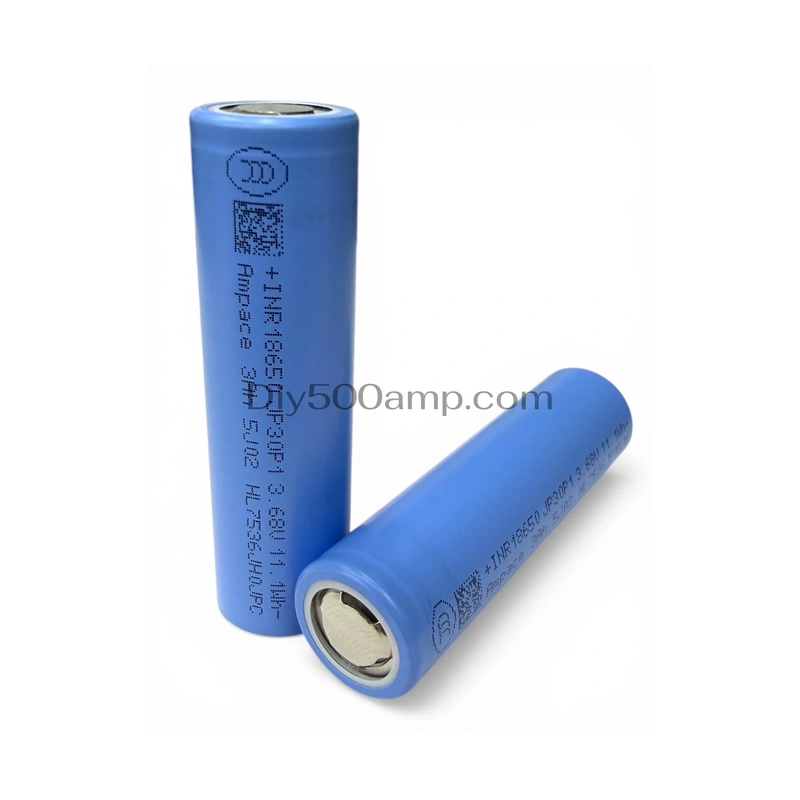
Ampace JP30P1
Ampace 18650
18650
These results may include over-datasheet or destructive stress tests. Cells can continue heating after a test stops and may vent, spark, ignite, or enter thermal runaway. Never reproduce these tests or use these current levels in packs.
BatteryRealData public report
Technical BatteryRealData summary of selected battery cells, including capacity, energy, power, and temperature metrics.
Selected cells
Ampace 18650
Report analysis
This BatteryRealData report reviews the Ampace JP30P1 18650 cell across a full current range from 1A CC to 60A CC. Across the completed tests from 1A through 40A, the Ampace JP30P1 maintained strong usable capacity above 3.0V. Usable energy gradually decreased as current increased, which is expected because higher current normally creates more voltage sag and heat. The 50A CC and 60A CC tests both ended early. Because of that, those two results should be treated as stress-test data rather than full completed discharge comparisons.
| Item | Details |
|---|---|
| Cell tested | Ampace JP30P1 |
| Brand | Ampace |
| Cell size | 18650 |
| Test method | Constant current discharge |
| Current range tested | 1A CC to 60A CC |
| Main comparison point | Usable capacity and energy above 3.0V |
| Cutoff voltage | Not provided |
| Cell chemistry | Not provided |
| Cell weight | Not provided |
| Test Current | Usable Capacity Above 3.0V | Usable Energy Above 3.0V | Peak Power | Max Temperature | Test Status |
|---|---|---|---|---|---|
| 1A CC | 2845.304 mAh | 10.6115 Wh | 4.1439 W | 27.43°C | Completed |
| 10A CC | 2743.724 mAh | 10.024 Wh | 41.2295 W | 38.51°C | Completed |
| 15A CC | 2744.642 mAh | 9.9321 Wh | 61.2889 W | 44.28°C | Completed |
| 20A CC | 2693.744 mAh | 9.6891 Wh | 81.3736 W | 54.02°C | Completed |
| 30A CC | 2718.902 mAh | 9.6489 Wh | 120.3521 W | 64.16°C | Completed |
| 35A CC | 2723.941 mAh | 9.6057 Wh | 137.9826 W | 68.33°C | Completed |
| 40A CC | 2698.142 mAh | 9.4263 Wh | 156.0844 W | 71.28°C | Completed |
| 50A CC | 2694.709 mAh | 9.2978 Wh | 191.5532 W | 80°C | Ended early |
| 60A CC | 2243.822 mAh | 7.7777 Wh | 226.1491 W | 80°C | Ended early |
The highest usable capacity above 3.0V was recorded at 1A CC, with 2845.304 mAh. From 10A CC through 40A CC, the cell stayed in a close usable-capacity range, with results between 2693.744 mAh and 2744.642 mAh above 3.0V. This shows that the Ampace JP30P1 holds much of its usable capacity under higher current levels when the test completes. At 50A CC, the usable capacity above 3.0V was 2694.709 mAh, but the test ended early. At 60A CC, usable capacity dropped to 2243.822 mAh and the test also ended early.
Usable energy above 3.0V decreased as current increased:
| Test Current | Usable Energy Above 3.0V |
|---|---|
| 1A CC | 10.6115 Wh |
| 10A CC | 10.024 Wh |
| 20A CC | 9.6891 Wh |
| 30A CC | 9.6489 Wh |
| 40A CC | 9.4263 Wh |
| 50A CC | 9.2978 Wh |
| 60A CC | 7.7777 Wh |
The 1A test produced the highest energy result. The 35A and 40A completed tests still delivered useful energy above 3.0V, but the drop compared with lower-current tests shows the normal effect of higher load stress. The 60A result is much lower than the other tests and should not be treated the same as a completed discharge because the test ended early.
Peak power increased as test current increased:
| Test Current | Peak Power |
|---|---|
| 1A CC | 4.1439 W |
| 10A CC | 41.2295 W |
| 20A CC | 81.3736 W |
| 30A CC | 120.3521 W |
| 40A CC | 156.0844 W |
| 50A CC | 191.5532 W |
| 60A CC | 226.1491 W |
The highest peak power recorded was 226.1491 W during the 60A CC test. However, that test ended early, so this number is useful as a peak stress reference, not as proof of sustained full-discharge performance at 60A.
Temperature increased clearly with current. The completed 40A CC test reached 71.28°C. The 50A CC and 60A CC tests both reached 80°C and ended early. For customer use, the completed tests up to 40A provide the cleaner comparison data. The 50A and 60A results show that the cell can reach very high stress levels, but they also show that thermal management becomes critical. Customers should not assume that the 50A or 60A results represent safe continuous use in every pack design. Pack layout, cooling, nickel or copper busbars, holder design, enclosure airflow, and BMS limits can all affect real-world safety.
Cell weight was not provided in this dataset, so this report cannot compare energy density or power-to-weight performance. For DIY500AMP-style use, weight matters when two cells perform similarly. A lighter cell can improve pack weight and energy per gram, while a heavier cell may sometimes provide better thermal mass or mechanical robustness. Since weight is missing here, the practical selection should be based mainly on usable energy above 3.0V, usable capacity above 3.0V, peak power, maximum temperature, and test completion quality.
This report uses only the values available in the BatteryRealData dataset provided. Important data-quality notes:
Because cutoff voltage is missing, this report focuses on the standardized available metrics: usable capacity above 3.0V, usable energy above 3.0V, peak power, maximum temperature, and whether the test completed.
For customers looking at the Ampace JP30P1 for high-current DIY500AMP-style use, the strongest completed-test range in this dataset is up to 40A CC. The cell maintained usable capacity above 3.0V very well from 10A CC through 40A CC, while energy decreased gradually as current increased. The 35A CC and 40A CC results are especially useful for customers who want high-current performance data without relying on early-stop tests. The 50A CC and 60A CC results should be treated as high-stress reference data only. They produced higher peak power, but both tests ended early and reached 80°C. For continuous or repeated high-current use near those levels, customers should validate cooling, pack design, wiring, busbars, and safety limits before choosing this cell. Practical recommendation: choose the Ampace JP30P1 when you need a strong 18650 high-current cell and your application stays within a properly tested thermal range. For the cleanest completed BatteryRealData comparison, focus on the 1A through 40A results and treat 50A and 60A as stress-test data.
Verified data
Ampace 18650
Ampace 18650
Ampace 18650
Ampace 18650
Ampace 18650
Ampace 18650
Ampace 18650
Ampace 18650
Ampace 18650